
Here’s your quick rundown:
Proper 4-season room insulation keeps the space comfortable through winter and summer. This involves improving the ceiling, walls, and floor with modern insulation materials. Upgrading your windows and doors is also a critical step for retaining conditioned air. My Deck specializes in making your space a true, energy-efficient sunroom in New Jersey and Pennsylvania.
We build rooms meant for true year-round living. A 4-season room insulation strategy needs careful planning for lasting comfort. Homeowners want a bright, airy space that does not feel hot in July or cold in January. We help clients achieve this by detailing every structural component, including the windows and doors. My Deck focuses on maximizing the energy performance of every 4-season room we build in New Jersey and Pennsylvania. We design sunrooms that stay comfortable and manage energy costs.
Understanding 4-Season Room Insulation
Insulation is the foundation of any comfortable, efficient addition. We view the entire structure as a temperature envelope that needs protection from the outside air. Properly insulating a sunroom goes beyond simple wall filling. It requires specific materials and methods for the unique construction of sunrooms. We carefully review climate zone requirements and local building codes for every project.
Ceiling Insulation
The ceiling is often the largest surface area facing direct solar heat and winter cold. We concentrate heavily on the maximum R-value in the ceiling for this reason. Proper ceiling insulation also requires adequate ventilation to prevent moisture problems. Warm, moist interior air hitting a cold ceiling can cause condensation and eventually mold. We always include a vapor barrier and proper roof ventilation.
Recommended R-values vary significantly based on your local climate zone in New Jersey and Pennsylvania. We follow all current International Residential Code (IRC) requirements. Generally, we target R-38 or higher for optimum 4-season room insulation performance in the ceiling.
Materials Used for Ceiling Insulation
We rely on high-performance materials to minimize heat transfer through the ceiling. This selection must balance R-value with the construction limitations of the ceiling structure.
- Closed-Cell Spray Foam: This material offers the highest R-value per inch and creates an air seal. We recommend closed-cell spray foam for sunroom ceilings because it also acts as a moisture barrier.
- Rigid Foam Boards: Polyisocyanurate or extruded polystyrene boards provide a solid R-value and structural stability. We often use rigid foam boards in combination with other insulation types.
- Fiberglass Batts: These are a cost-effective option for ceiling insulation for sunrooms with standard framing. We prefer high-density fiberglass batts for better performance in a limited space.
Wall Insulation
The wall insulation system protects your 4 season room from thermal bridging through the studs. We design walls to maximize the continuous insulation layer. This is critical for preventing hot or cold spots on the interior walls. Proper wall insulation improves the overall stability of the room’s temperature.
Types of Wall Insulation
We select wall insulation based on the specific framing and wall thickness of the sunroom. Every material must meet the required R-value for the service location.
- Closed-Cell Spray Foam: This option delivers structural rigidity and superior thermal performance. We use closed-cell spray foam because it stops air leakage within the wall cavity.
- Fiberglass Batts: Standard fiberglass is common and provides reliable insulation at a lower material cost. We install batts carefully to completely fill the wall cavity without compression.
- Mineral Wool Batts: Mineral wool offers excellent fire resistance and sound-dampening qualities. We consider mineral wool when soundproofing is a key concern for the client.
Floor Insulation
Cold floors are a common complaint in uninsulated or poorly insulated additions. We treat the floor system as seriously as the roof and walls. Effective floor insulation for sunrooms prevents cold air from infiltrating through the foundation or crawlspace. This step is necessary for an energy-efficient sunroom.
Moisture control and subfloor insulation are mandatory steps for any floor system. We install a heavy-duty vapor barrier below the subfloor. This prevents ground moisture from wicking up and compromising the floor insulation’s effectiveness.
We also focus on insulating underfloor HVAC ducts when heating and cooling lines run beneath the room. This prevents expensive conditioned air from losing heat or cool air to the cold crawlspace. We fully wrap all supply and return ducts with foil-faced insulation.
Window and Door Upgrades
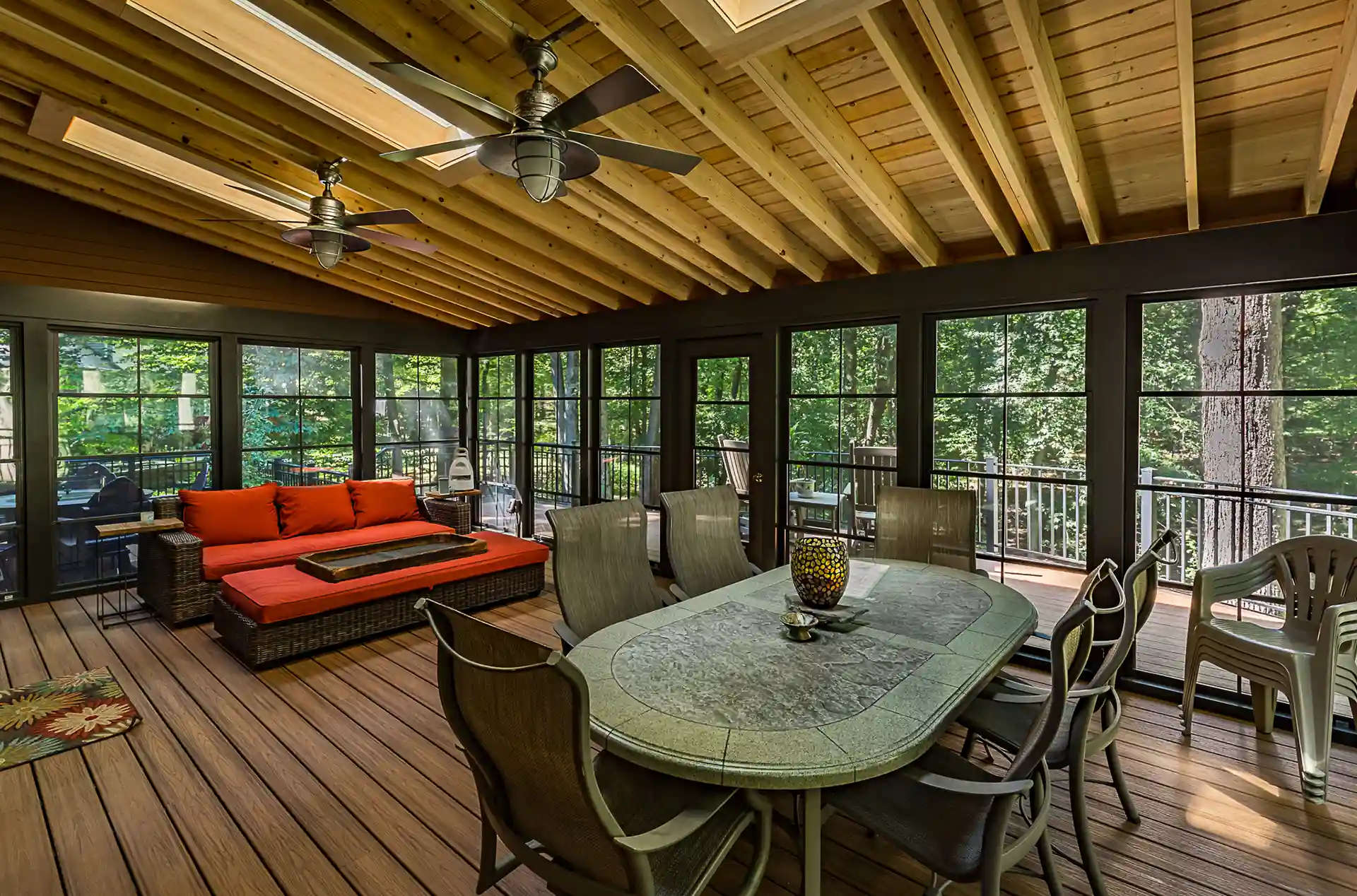
Windows and doors represent the biggest weak points in any thermal envelope. We consider them the most significant component of 4-season room insulation. Upgrading to high-performance windows and doors often provides the most noticeable impact on comfort. We specify units with low-emissivity (Low-E) coatings. Low-E coatings reflect heat back to its source, keeping heat in during the winter and out during the summer.
Double vs. Triple-Pane Windows
We choose the glass unit that best matches the required R-value and budget.
- Double-Pane Windows: These feature two panes of glass separated by a gas-filled space. We use double-pane windows as the minimum standard for our sunrooms.
- Triple-Pane Windows: These units have three panes of glass and two gas-filled spaces. We recommend triple-pane windows for superior insulation and sound deadening, especially in colder climates or noisy areas.
Gas Fills for Insulation Improvement
The gas between the panes acts as an insulating layer. We prefer using inert gases for superior insulation performance.
- Argon Gas: This is a dense, non-toxic gas that is much better than air for stopping heat transfer. We include argon gas fill in all of our double-pane windows.
- Krypton Gas: This gas is even denser than argon and provides better insulation in thinner spaces. We specify krypton gas in high-end triple-pane windows for maximum efficiency.
Weatherstripping, Caulking, and Door Sweeps
These simple details are critical for a fully sealed, energy-efficient sunroom. We treat air leakage through the joints and seams as a serious energy loss.
- Weatherstripping: We apply high-quality foam or rubber weatherstripping to all operating window and door sashes. This creates a tight seal when the unit is closed.
- Caulking: We seal all gaps where the window or door frame meets the rough opening. This prevents air infiltration around the perimeter of the unit.
- Door Sweeps: We install door sweeps and thresholds to close the gap at the bottom of the door. This stops air and moisture from entering at the floor level.
Skylight Considerations and Energy-Efficient Alternatives
Skylights add light but can also be a source of heat loss or gain. We consider the specific thermal properties of the skylight unit. We recommend energy-efficient skylights with high R-values and Low-E glass. We also consider tubular daylighting devices as a low-impact alternative. Tubular devices offer natural light without the significant thermal penalty of a large glass opening.
HVAC Integration
The heating and cooling system must match the high performance of the insulated room. We do not use oversized or undersized units, as this leads to inefficient operation. We work with HVAC professionals to calculate the exact load requirements for the newly insulated space. This ensures the system only runs as long as necessary. Mini-split heat pumps are a common solution we recommend for 4-season room climate control. Mini-splits offer efficient heating and cooling without connecting to the main house system.
Air Sealing and Ventilation
Air sealing is as important as the insulation itself. We focus on sealing every small gap or penetration in the structure. This includes where electrical wiring or plumbing passes through the walls. We use high-quality sealants and foams to stop uncontrolled air movement.
We also ensure the room has proper mechanical ventilation. This system replaces stale, moist indoor air with fresh outdoor air. An Energy Recovery Ventilator (ERV) is the most efficient option. An ERV captures heat from the outgoing air and transfers it to the incoming fresh air. This minimizes energy loss while insulating a sunroom.
Cost Considerations
Insulation upgrades represent a significant initial investment but offer high long-term returns. We provide detailed cost breakdowns for materials and labor. High R-value materials like closed-cell spray foam cost more initially than standard fiberglass. However, they provide greater energy savings over the life of the room. We view this as a permanent investment in your home’s comfort and value. This upgrade increases the usable square footage of your New Jersey or Pennsylvania home.
DIY vs Professional Installation
While some experienced DIY homeowners successfully insulate sunrooms using batts or rigid foam, achieving code-compliant air sealing, proper vapor retarder placement, and ventilation in a high-glass, high-exposure room is significantly harder than in standard walls.
Mistakes can lead to condensation, mold, or reduced energy performance. Most homeowners achieve the best results—and preserve manufacturer warranties—by hiring licensed professionals who are familiar with local climate-zone requirements and sunroom-specific detailing.
Step-by-Step Insulation Upgrade Plan
We follow a strict, phased approach to every sunroom upgrade. This system ensures every detail of the 4-season room insulation is addressed.
1. Assessment
We start by assessing the existing structure and identifying thermal weak points. We use thermal imaging to pinpoint areas of air leakage and missing insulation. This step determines the final scope of work.
2. Design and Material Selection
We draft a detailed plan showing where insulation, vapor barriers, and air sealing will be applied. We select the appropriate sunroom insulation materials to meet or exceed local R-value requirements. We specify all window and door unit upgrades.
3. Permits and Codes
We manage all necessary building permit applications. We ensure the 4-season room insulation design complies with all New Jersey and Pennsylvania building codes. This protects you from future issues during an inspection or home sale.
4. Installation
We systematically install the insulation in the ceiling, walls, and floor cavities. We prioritize air sealing before any insulation is installed. We ensure proper ventilation is built into the roof system.
5. HVAC Integration
We work with licensed HVAC technicians to install the correctly sized system. This system is chosen specifically to handle the room’s climate control needs efficiently. The ducts are fully insulated during this phase.
6. Sealing and Finishing
We complete the weatherstripping, caulking, and interior finishes. This locks in the thermal envelope and prepares the room for daily enjoyment.
Maintenance Tips
Proper maintenance protects your investment in an energy-efficient sunroom. We recommend a few simple steps to maintain peak performance.
Periodic Inspection of Insulation and Seals
We suggest homeowners inspect the caulking around windows and doors annually. This allows you to catch any cracks or shrinking before significant air leakage occurs. We also recommend checking the visible edges of insulation for settling or moisture.
HVAC System Maintenance for Efficiency.
We advise scheduling bi-annual cleaning and servicing of the mini-split or HVAC unit. This keeps the system running efficiently and prevents unnecessary energy waste. We always recommend changing filters quarterly.
Addressing Condensation, Mold, or Drafts Early
We recommend homeowners address any signs of moisture immediately. This stops small water issues from becoming large structural or mold problems. We advise sealing drafts with weatherstripping as soon as they are noticed.
Updating Insulation with Newer, Energy-Efficient Materials Over Time.
We recommend homeowners consider updating old or outdated fiberglass insulation during a major renovation. This allows the room to take advantage of newer technologies like closed-cell foam. We help clients evaluate the cost-benefit of insulation upgrades.
Ready to Maximize Your 4 Season Room Comfort?
We provide expert installation for a truly comfortable sunroom. My Deck specializes in high-end outdoor living structures in New Jersey and Pennsylvania. We follow a strict process that ensures maximum performance from your 4-season room insulation. We are a licensed and insured contractor with a deep understanding of local building requirements and material performance. We deliver a sunroom addition that is comfortable and efficient in every season. We use only proven materials and follow an accountable construction method that homeowners trust.
We are ready to design your comfortable, energy-efficient space. My Deck focuses on transparent communication and reliable project management. We invite you to schedule a design consultation with our experienced team today. We will detail a customized 4-season room insulation plan that will deliver true year-round comfort. Schedule a consultation today.
4-Season Room Insulation FAQs
What is the best insulation material for a 4-season room?
The best material is typically closed-cell spray foam due to its high R-value and air-sealing properties, but ultimately it depends on the wall/ceiling depth, budget, and local code requirements. Closed-cell foam provides the most effective 4-season room insulation within limited wall and ceiling cavities. We also use rigid foam boards and high-density fiberglass, depending on the specific application and R-value target.
Do I need permits for insulation upgrades?
You generally need a permit when the work involves structural changes or electrical/HVAC modifications. We always manage all permits to ensure your insulating a sunroom project complies with New Jersey and Pennsylvania codes. We follow the code requirements closely to ensure your safety and protect the integrity of your home.
How much can I save on energy bills?
Effective energy-efficient sunroom upgrades can reduce heating and cooling costs by 20% or more. The exact savings depend on your existing room’s efficiency and local energy rates. We design your insulation system to maximize long-term savings and comfort.
Can insulation help with noise reduction?
Yes, high-density insulation materials like closed-cell spray foam and mineral wool significantly reduce sound transmission. This makes your 4-season room a much quieter and more relaxing space. We recommend these materials when exterior noise is a primary concern for the homeowner.