
Here’s your quick rundown:
Composite decking in cold weather handles better than wood, but it still faces stress during freeze cycles. My Deck explains how snow, ice, and temperature swings affect traction, surface behavior, and long-term performance. Homeowners follow simple winter steps that help protect surfaces when storms hit. These actions keep decks safer until spring returns
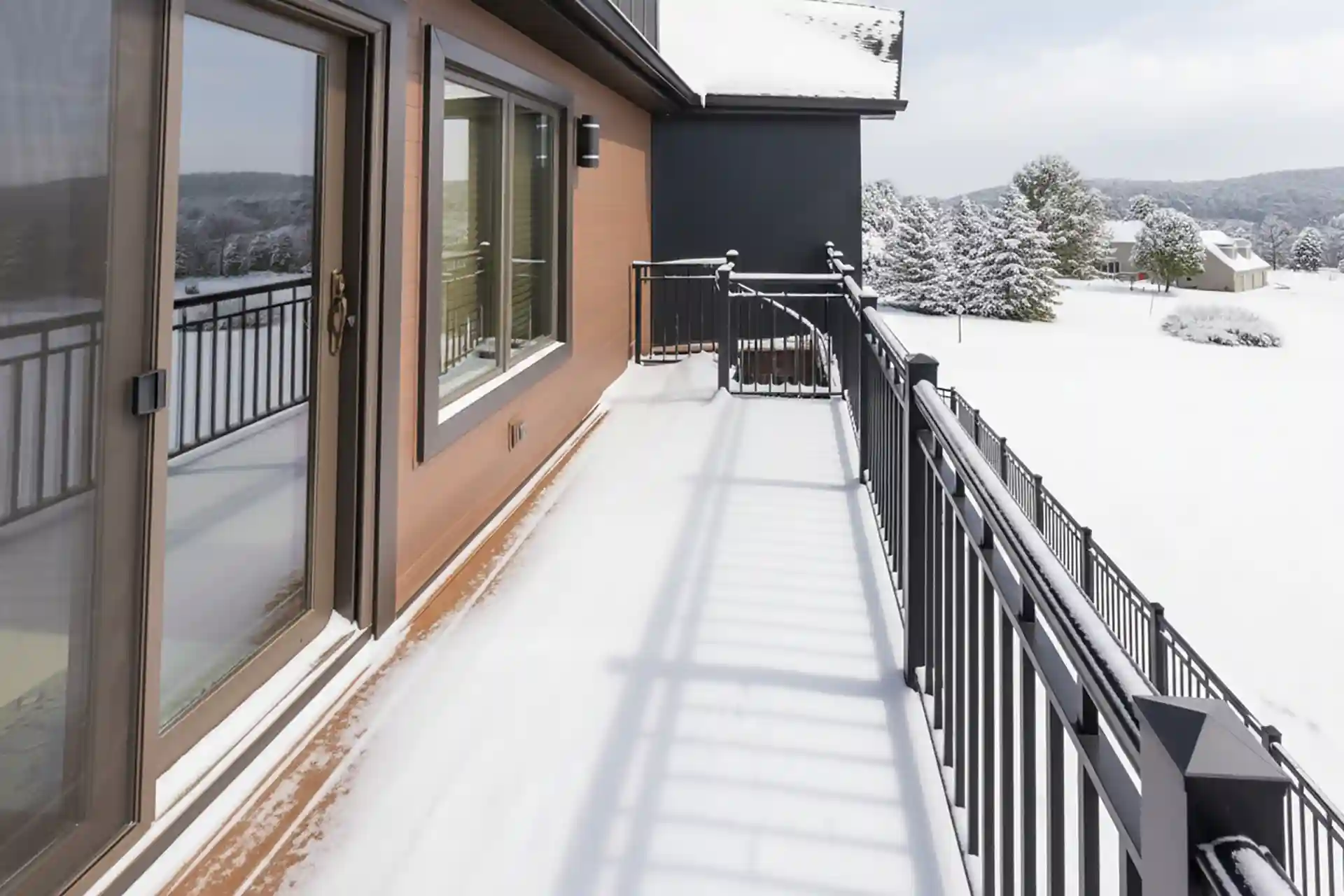
Composite decking in cold weather faces steady pressure from freeze cycles across New Jersey and Pennsylvania. We see how moisture settles into grain patterns and slows drying times. We see how snow loads linger under shade and increase traction concerns.
At My Deck, we help homeowners understand these patterns with guidance that applies to real conditions. If your deck is at the end of its useful life, we also help homeowners plan new decks that hold stronger during long winters in our region.
How Cold Weather Affects Composite Decking
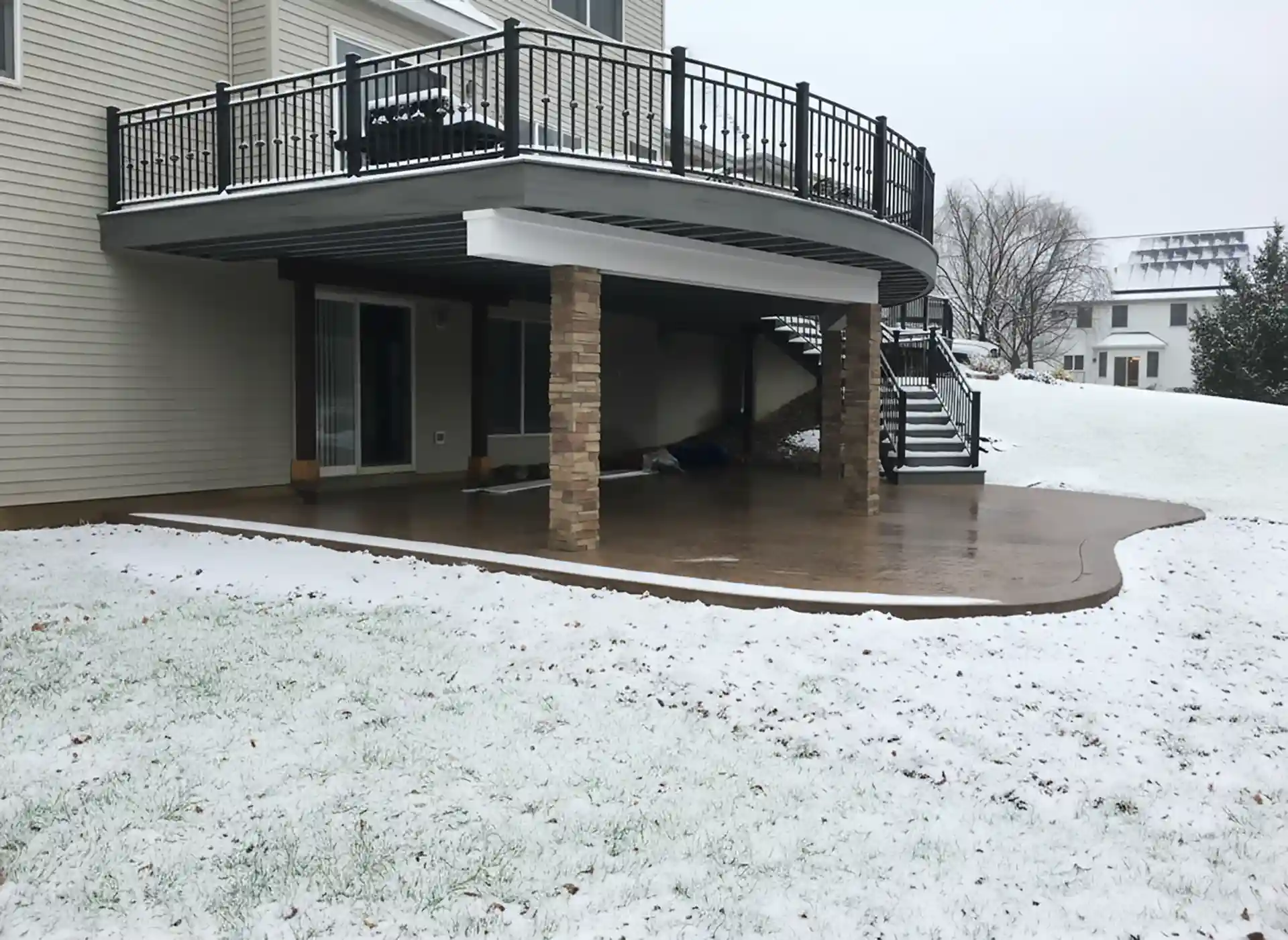
Composite decking in cold weather responds to rapid temperature swings, extended snow cover, and long freeze cycles. These shifts influence surface traction, moisture flow, grain patterns, and board movement. Winter storms reveal problem areas on older decks that need attention. Homeowners gain clearer expectations when they understand how composite materials behave in harsh weather.
Material Stability
Composite boards expand during warm periods and contract during cold periods. This seasonal cycle becomes clear when winter temperatures drop fast. These shifts remain small, yet they influence how each board sits within the frame. Material stability describes how well the board keeps its shape under seasonal pressure.
Expansion slightly increases board length, and contraction reduces it. Installers prevent stress by following correct spacing rules at end joints and fastener points. Older decks with tight gaps show increased strain during prolonged cold spells.
Moisture Resistance
Composite decking resists moisture through a protective surface cap. This cap blocks water from entering the core during storms. Moisture resistance becomes important because winter storms leave snow on deck surfaces for extended periods.
Meltwater drains during daylight hours and freezes at night. This cycle continues for days during harsh winters. Capped boards repel water and reduce freeze-thaw expansion within the material. Uncapped edges draw small amounts of moisture during long exposure. Good airflow under the deck helps surfaces dry faster. Poor drainage increases stress in cold months and slows recovery after storms.
Color and Surface Durability
Winter affects surface grain and board color in several small but noticeable ways. Frost settles into shallow grain and lightens surface appearance until temperatures rise. Snow carries grit that scrapes patterns when dragged under boots.
Ice sheets dull traction and press against the grain texture. Color shifts appear during repeated warm and cold cycles when sunlight reflects off frozen surfaces. Surface durability describes how well a board holds these patterns under seasonal pressure. Composite materials return to normal appearance once frost clears and temperatures warm.
Slip Resistance and Safety Concerns
Surface traction changes fast during winter. Frost forms thin layers that stay hidden in early morning hours. Meltwater freezes at night, creating slick spots near stairs or railings. Slip resistance describes how well the surface maintains grip under these changing conditions.
Composite boards with deeper grain patterns regain traction faster when sunlight softens thin ice layers. Shaded decks lose traction first and recover last because surfaces stay colder throughout the day. Winter composite decking care starts with snow removal before freeze cycles take hold. You can keep walkways safe by removing debris that traps moisture.
Benefits of Composite Decking in Winter
Composite decking in cold weather performs better than wood because the material resists swelling, cracking, and decay. Winter storms expose weaknesses in wood that composite avoids. We see these advantages across many projects in New Jersey and Pennsylvania. Those with composite decks see fewer long-term concerns during harsh months.
Superior Durability and Low Maintenance
Composite decks offer strong durability in winter because the material retains its structure under cold conditions. Superior durability means the board resists splitting, warping, and surface breakdown. Low-maintenance means the surface requires simple care rather than stains or sealers. Wood boards take on water during storms, and that water expands during freeze cycles.
Composite avoids these swings because the core and cap create stable density. You will spend less time managing winter upkeep because snow and ice sit on the surface rather than entering the material. Winter composite decking care becomes easier when the surface stays stable throughout the season.
Resistance to Winter Elements
Composite deck boards stand firm against snow, ice, and wind that hit New Jersey and Pennsylvania each year. Resistance to winter elements helps the decking avoid moisture intrusion and surface damage during storms. Snow piles on the surface without entering the core.
Ice releases more easily because the composite carries a uniform density. Meltwater drains cleanly when builders set the correct slope during installation. These advantages improve long-term reliability. Cold-weather effects on composite decking are less severe when installers follow best practices that support drainage and airflow.
Long-Term Performance
Composite decking maintains long-term performance across decades of winter weather. Composite decks retain their structural integrity, surface quality, and color depth through repeated freeze-thaw cycles. Composite materials resist rot, insects, and moisture intrusion. Wood boards absorb water and show wear within a few harsh winters. Composite avoids this pattern because the surface cap blocks water and the core resists decay. Homeowners see value in decks that remain stable throughout the winter months.
Winter Maintenance Tips for Composite Decking
These winter tips will help you protect your composite decks during harsh weather. While we do not offer maintenance services, we share this information so you understand what supports safer winter performance and how simple habits reduce stress on deck surfaces.
Regular Cleaning
Regular cleaning reduces moisture pockets that turn into thin ice layers. Leaves, dirt, and wind-blown debris trap water. Water freezes overnight, reducing traction the next morning. Sweep surfaces before storms hit. Clean boards dry faster and regain traction sooner. Winter composite decking care starts with keeping the surface clear of buildup that slows drying time.
Snow and Ice Removal
Snow removal protects surface grain from wear. Use plastic shovels to avoid scraping the protective cap. Snow moves away cleanly when pushed along the length of the boards. Ice forms when meltwater freezes overnight. Loosen ice by tapping lightly. Sunlight softens thin layers and speeds recovery. Shaded areas require more attention because ice lingers longer. This step supports safer composite decking in cold weather and prevents deeper surface stress.
De-Icing Products
De-icing products help remove stubborn ice during long freeze cycles. Calcium chloride performs well on many composite surfaces without harming the cap. Rock salt leaves a rough residue and sits harder on the grain texture. If you plan on using calcium chloride, test a small area before broad application. Wash away remaining granules. Composite decking maintenance winter steps become safer when you control ice buildup with careful product selection.
Regular Inspections and Repairs
Regular inspections reveal problems early. Railing posts move slightly when storms push against them. Fasteners loosen under repeated freeze and thaw cycles. Framing shifts under heavy snow loads. Downspouts drain meltwater toward deck corners. Tighten loose parts during mild days. Older decks show dips, lifted boards, or shifting joints that appear more obvious during winter months. We recommend that homeowners with aging decks speak with us about new builds that perform better in cold conditions.
Looking for the Top Deck Contractor in New Jersey and Pennsylvania?
My Deck designs composite decks that hold up well in harsh winter weather. We understand how snow, ice, and long freeze cycles affect traction, structure, and safety. We plan decks with proper framing, airflow, and drainage to deliver better winter performance year after year. These design choices support stronger results for homes across New Jersey and Pennsylvania.
Older decks suffer during winter. Boards pull apart. Fasteners loosen. Surfaces lose grip under snow and ice. These problems point to age or design limitations. We review these issues during design consultations for new projects. We compare older structures with modern composite systems that resist winter stress. Gain clear direction by seeing how new materials support stronger long-term performance in cold regions.
Ready to Explore a New Composite Deck That Performs Every Winter?
Strong composite decking in cold weather performance starts with smart design and clear planning. My Deck guides homeowners through material selection, framing layout, and grain patterns that improve winter traction.
If maintaining your old deck is burdensome, schedule a design consultation for a new composite deck. We’ll help you understand how older decks reach their limits during harsh conditions and how replacement improves safety and performance.
Composite Decking in Winter FAQs
Does composite decking expand or contract in cold weather?
Composite boards contract during cold spells and expand during warmer hours. Proper spacing allows natural movement without stress on the structure. Cold weather effects on composite decking appear smaller when installers follow best practices.
Can I use salt on my composite deck in the winter?
Calcium chloride performs well on many composite surfaces. Rock salt leaves residue that sticks to the surface grain. Homeowners can protect composite decking in winter by selecting the right product.
How can I prevent my composite deck from becoming slippery in winter?
You should remove the snow early so ice does not form. Grain texture holds traction, but ice still reduces surface grip. Winter composite decking care supports safer walking conditions.
How often should I clean my composite deck in winter?
Remove debris every few weeks during winter. This step stops moisture from freezing into thin ice layers. Composite decking maintenance, winter habits improve safety during storms.
Is composite decking better than wood for cold climates?
Composite decking avoids cracking and moisture intrusion that affect wood during harsh winters. The surface cap blocks water and reduces long-term damage. Composite decking in cold weather stays stronger and more predictable through repeated freeze cycles.