Homeowners around New Jersey and Pennsylvania often want to know about TimberTech vs Trex.
Trex focuses on composite decking. That’s wood fibers mixed with plastic and capped on top. TimberTech makes composite boards, too. They also offer Advanced PVC boards without wood fibers.
The right pick depends on your budget. It depends on how much sun hits the deck. Whether wet weather or pool splashing is an issue. And how much scratching from daily use do you expect?
We’ve installed both brands on plenty of jobs over the years. Here’s what matters in real backyards.
TimberTech and Trex: What’s the Difference?
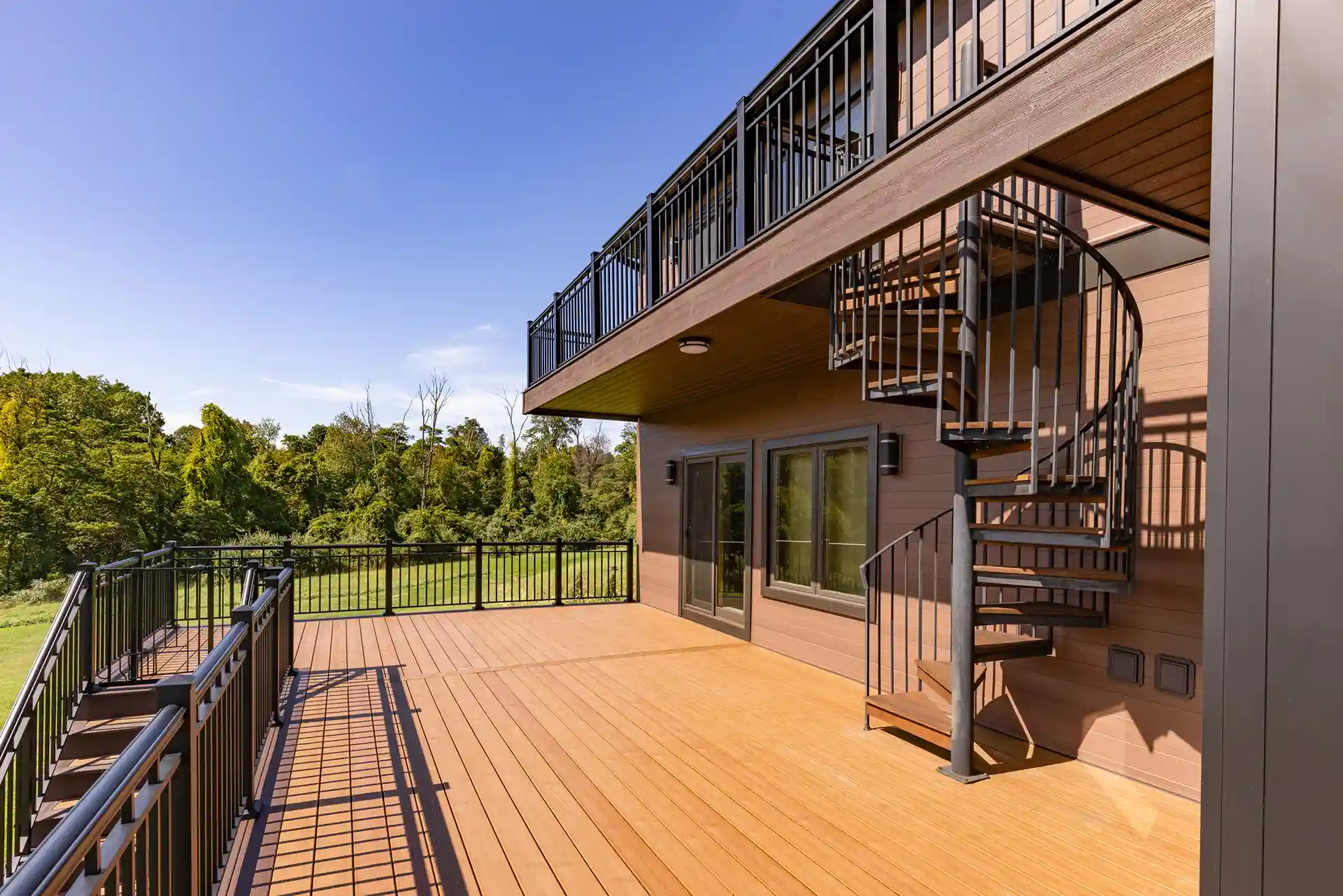
Trex sticks with capped composite decking. While TimberTech offers composite decking materials, it also offers advanced PVC collections. Advanced PVC has zero wood fibers. That makes a difference with moisture and heat.
TimberTech Composite vs Trex Composite
- Durability: Both withstand the weather we get around here. Hot summers. Wet springs. Cold winters with freeze and thaw. They last for decades when we frame them right and fasten them properly.
- Appearance: Both offer lots of color and grain patterns. Some look closer to real wood up close. Others have a cleaner, more consistent look. You can check out samples in our showroom to see what works with your house.
- Price range: Entry-level boards from either brand cost less. Premium collections cost more. The board price is only part of the job. Stairs, railings, and any extra framing or sloping ground add up fast. We give you the full picture before you decide.
- Maintenance: You skip the sealing and staining with both. Sweep it off. Hose it down when it gets dirty. That’s usually enough.
- Warranty: The manufacturers back their boards for 25 to 50 years on fade, stain, and structure. Some lines go longer. We add our 2-year service warranty. We fix what needs fixing if it’s from our work.
- Available colors and collections: Trex has solid options across its lines. Some collections handle heat better. TimberTech has a wide range, too. Different textures and looks in both their composite and PVC. Plenty of choices either way.
What Makes TimberTech Advanced PVC Different?
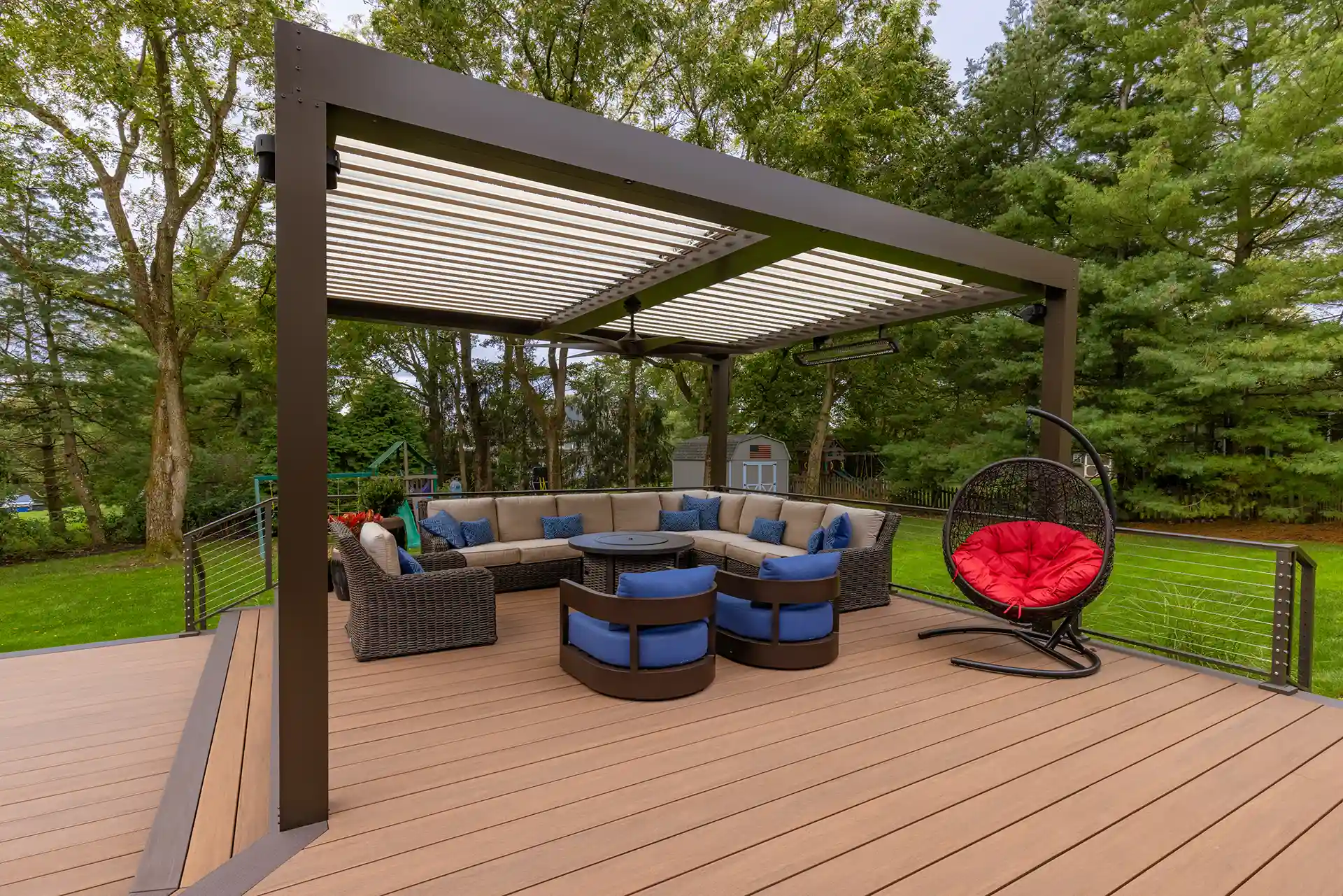
It fights moisture really well. No wood to soak up water or grow mold. That helps a lot if your deck sits in a low spot that stays wet after rain. Or right by a pool with all the splashing.
The boards weigh less. That can make framing simpler on bigger projects. It often stays cooler in the sun than composite boards. Bare feet appreciate that on hot days. The surface is harder, though. Scratches and scuffs can show up more easily than on composite.
Scratch-Resistance
Nothing is scratch-proof. Life happens on a deck. Composite boards hide the little marks better most of the time. The texture helps blend them in.
Advanced PVC shows them more. Especially darker colors. Furniture legs, grill wheels, dog nails, or planters dragged across can leave noticeable marks.
We’ve seen both types hold up fine with normal use. It just depends on how much traffic and what kind of wear your deck gets.
Heat and Sun Exposure
Color matters a lot. Dark boards pull in more heat and feel hotter underfoot. For full sun decks or pool areas where kids run barefoot, lighter colors help a bunch.
TimberTech Advanced PVC tends to stay cooler overall. No wood fibers to hold the heat.
Trex has some collections made to cut down on heat, too. We can steer you toward those if your deck bakes in the afternoon sun.
Cost
Both brands have cheaper starter lines and higher-end ones.
What you pay in the end depends on deck size. Number of levels or stairs. Railings. And how much site work do we need for solid support?
We measure your yard and run the numbers with you. No surprises later. Don’t just compare the price per square foot on the board. The whole project adds up.
Which is Better for Your Home?
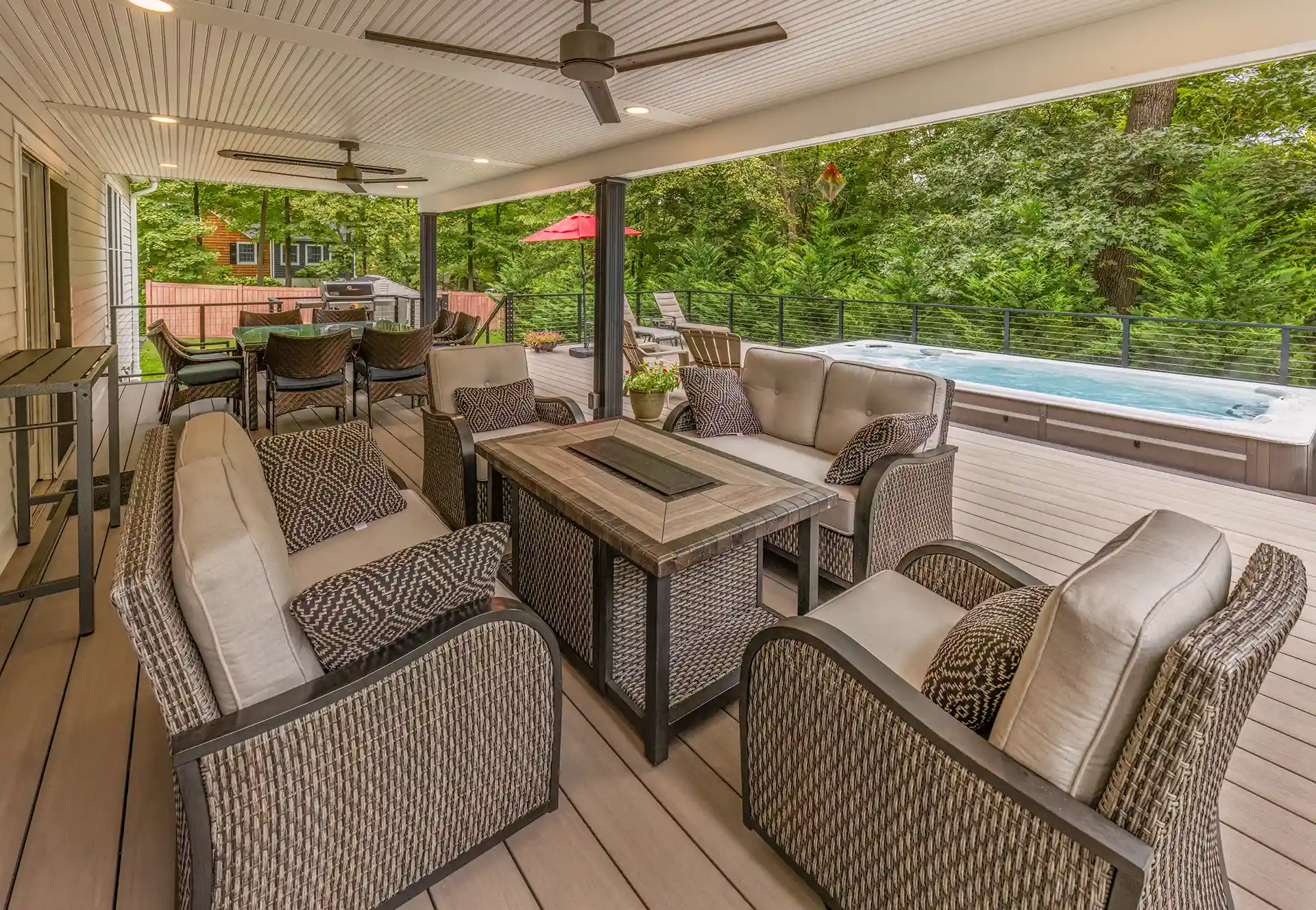
It depends on your setup and how you use the space.
- Go with Trex if you want straightforward composite options and clear price steps. Their lines cover most decks we build around here without complications.
- Go with TimberTech composite if you like a certain color or grain that fits your vision better. Some folks have a specific look in mind. One of their collections matches it.
- Go with TimberTech Advanced PVC if moisture or heat is your main worry. Pools, damp corners, or spots that get heavy sun all day. It handles the wet and stays cooler.
- Go with composite over Advanced PVC if scratches showing up would bother you. Dogs running around all day. Kids with toys. Heavy furniture moved. Composite hides that wear better in our experience.
TimberTech vs Trex: Final Verdict
Neither one beats the other across the board. You have to look at the exact collection and how it fits your deck. Not just the brand name.
It comes down to how the deck will get used every day. Where it sits on your property. And what kind of wear do you expect from your family’s daily use?
We’ve built thousands of decks since 1986. Both brands work great when we match them to the right spot and put them in right.
We’ve been a deck builder in New Jersey and Pennsylvania for nearly 40 years. We know these materials from real jobs in real yards around Flemington, Bridgewater, Princeton, and over in Bucks County.
If you’re trying to figure out TimberTech vs Trex for your home, give us a call. We’ll come take a look at your space and walk you through what makes sense for how you live out there.
TimberTech vs Trex FAQs
Is TimberTech better than Trex?
It depends on what matters most to you. TimberTech gives you the Advanced PVC choice for wet or hot spots. Trex keeps it simple with strong composite options. We’ve put in a lot of both, and they both do the job when picked for the right place.
Does TimberTech scratch more than Trex?
Advanced PVC can show marks more than composite boards. Trex composite hides everyday scuffs and nail marks better thanks to its surface texture. Premium lines on both sides perform well, though.
Is TimberTech Advanced PVC better than composite?
It wins on moisture resistance and staying cooler. But if you worry about scratches standing out, composite might be the safer pick for high traffic.
Which decking stays cooler?
TimberTech Advanced PVC usually feels cooler underfoot. Trex has collections that help with heat, too. Lighter colors make the biggest difference, no matter which brand.